Dubai’s combination of high heat, low humidity indoors (from constant AC use), and occasional coastal moisture creates a specific set of challenges for furniture and cabinetry. Wood that performs well in Europe or colder climates can warp, crack, or discolor here within a year or two if it’s the wrong choice. Here’s what actually holds up.
Why Climate Matters for Wood Selection in Dubai
Constant air conditioning keeps indoor humidity artificially low, while outdoor humidity (especially near the coast) can swing high. This constant expansion-and-contraction cycle is what causes cheap or poorly-treated wood to crack, warp, or develop gaps over time — it’s not just about heat resistance, but humidity-cycle resistance.
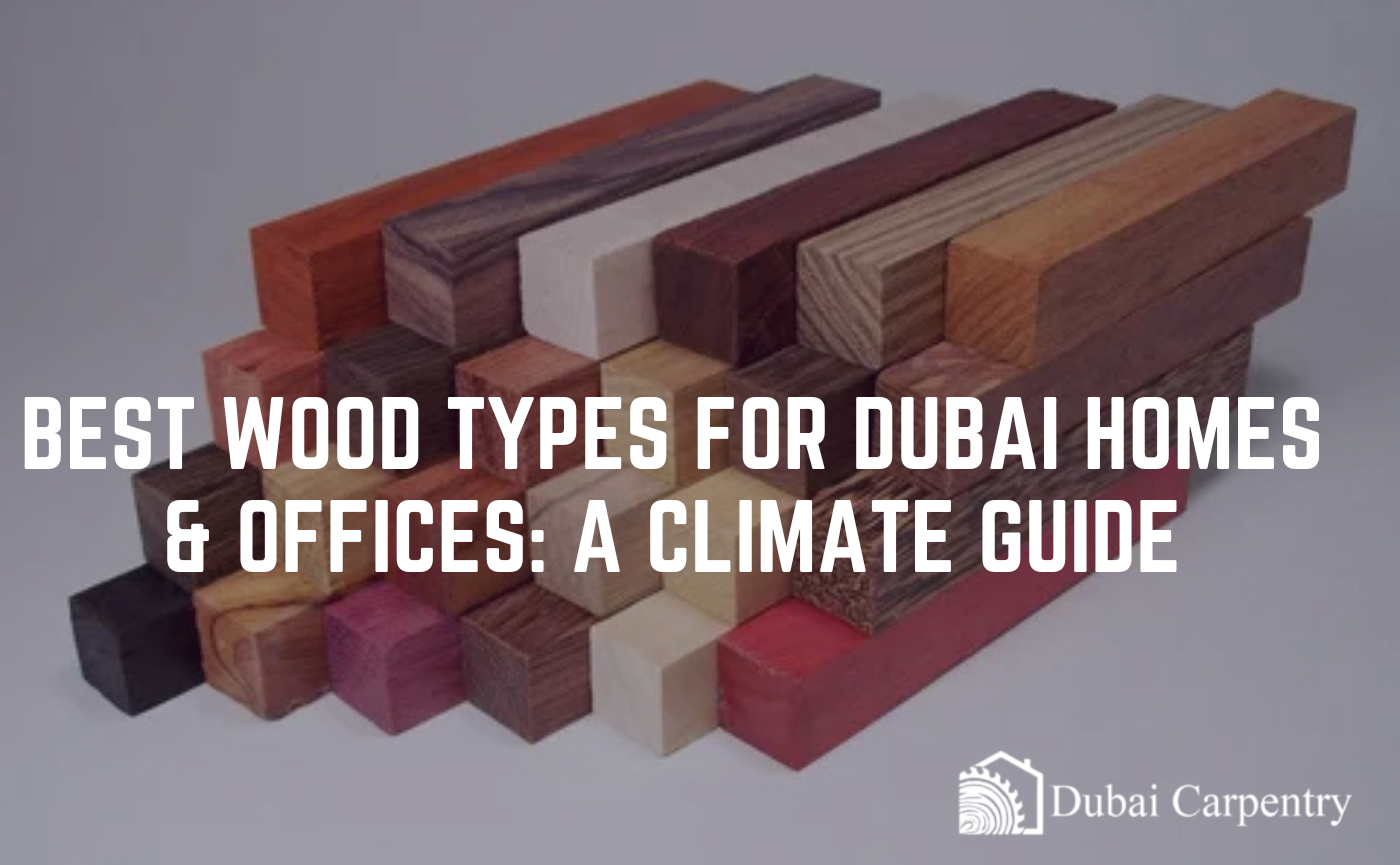
Best Wood & Material Choices for Dubai
1. Teak Naturally resistant to moisture and pests, teak is one of the most reliable choices for both indoor and outdoor furniture in Dubai — it’s why you’ll see it recommended for balcony and garden furniture specifically.
2. Engineered Wood (Plywood/MDF with proper sealing) When properly sealed and finished, engineered wood is dimensionally more stable than solid wood in fluctuating humidity, making it a practical and cost-effective choice for wardrobes and kitchen cabinets.
3. HPL (High-Pressure Laminate) Extremely resistant to heat, scratches, and moisture — a popular choice for kitchen countertops and cabinet fronts in Dubai homes specifically because it doesn’t warp under AC-driven humidity swings.
4. Solid Oak or Walnut (with proper acclimatization) These hold up well if the wood is properly kiln-dried and acclimatized to local conditions before manufacturing — but poorly-sourced solid wood without this step is the most common cause of cracking furniture in Dubai homes.
Wood Types to Be Cautious With
- Untreated softwood (pine, etc.) — prone to warping and pest issues without heavy sealing
- Cheap veneer over particleboard — can delaminate faster in high-heat storage areas like garages or balconies
- Any wood without a proper moisture-sealing finish — regardless of type, an unsealed piece will struggle in Dubai’s conditions
Quick Reference Table
| Wood/Material | Best For | Climate Suitability |
|---|---|---|
| Teak | Outdoor & balcony furniture | Excellent |
| Engineered wood (sealed) | Wardrobes, cabinets | Very good |
| HPL | Kitchen counters, cabinet fronts | Excellent |
| Solid oak/walnut (acclimatized) | Indoor furniture, tables | Good |
| Untreated softwood | Not recommended without heavy sealing | Poor |
Frequently Asked Questions
Does furniture really need different wood in Dubai than in other countries? Not entirely different, but the treatment and sealing process matters more here than in temperate climates — the same wood type can perform very differently depending on how it was dried and finished before use.
Is solid wood always better than engineered wood in Dubai? Not necessarily — properly made engineered wood is often more dimensionally stable in Dubai’s AC-driven humidity swings than poorly-acclimatized solid wood.
How can I tell if my existing furniture has moisture damage starting? Early signs include slight warping at joints, small surface cracks, or drawers that suddenly stick or don’t close flush — worth having a professional assess before it worsens.
Not Sure Which Material Is Right for Your Space?
Send us a few photos of your space and we’ll recommend the right wood and finish for your budget and climate exposure.
Get Material Advice | WhatsApp Us